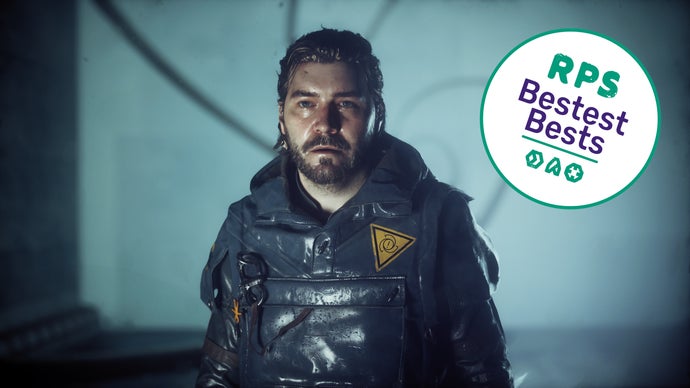
Every so often, a game arrives that feels like it slipped through a dimensional brEach from a braver timeline. According to Rock Paper Shotgun’s review of Control Resonant, Remedy’s follow-up to 2019’s cult hit Control is exactly that kind of anomaly — a “superbly strange action-RPG” that swings for the fences in an industry increasingly obsessed with playing it safe.
A Sequel That Breaks Its Own Rules
On paper, Control Resonant shouldn’t exist. As the review points out, it’s the sequel to a shooter that was well-liked but slow-selling — not exactly the kind of track record that usually greenlights a bigger, weirder follow-up. Even bolder, the game ditches both of the original’s defining pillars: protagonist Jesse Faden and the instantly recognizable brutalist maze of the Federal Bureau of Control’s headquarters.
That’s a genuinely risky move. Control’s shifting office-block architecture and SCP-flavored supernatural bureaucracy were the heart of its identity. Replacing the player character and the setting in one stroke could have gutted everything fans loved. Instead, the reviewer suggests the gamble pays off, delivering something that feels fresh while keeping the surreal DNA of the original intact.
New Hero, New Weapon, Same Beautiful Weirdness
The most eye-catching detail from the review? Combat in Control Resonant revolves around bashing “inside-out, interdimensional cryptids” with a shapeshifting stick. It’s a wonderfully unhinged description that tells you everything about the game’s tone — this is a studio fully committed to the strange, unbothered by conventional action-game formulas. If the original’s Service Weapon made you feel like a supernatural bureaucrat with a gun, its successor apparently wants you to feel like something stranger still.
Tiny and Godly at Once
The review’s most evocative line describes the experience as making you feel “tiny and godly at once” — a paradox that captures what made Control special in the first place. Remedy’s worlds have always been about scale: ordinary people dwarfed by incomprehensible forces, yet empowered by them. Resonant seems to lean even harder into that duality, letting players wield enormous power while remaining a small, fragile thing lost in something vast and unknowable.
It’s a design philosophy that echoes the best “new weird” fiction: the horror and the awe are inseparable. Based on the review’s enthusiasm, Resonant understands that feeling powerless and omnipotent in the same moment is exactly what makes this kind of surreal action-RPG tick.
Why This Matters for the Industry
Beyond the game itself, the review makes a pointed observation about the state of games-making. In an era the critic describes as “risk-averse” and penny-pinching, a sequel this strange — one that abandons its predecessor’s hero, setting, and recognizable formula — is practically an act of defiance. The reviewer even admits that skepticism had crept into their own expectations before playing.
That’s the real story here: Control Resonant is evidence that mid-budget oddities with a distinct creative vision can still get made, sequels can reinvent rather than iterate, and studios can trust audiences to follow them into the weird. For fans of ambitious single-player experiences, that’s encouraging news in a market dominated by safe sequels and live-service bets.
Where to Play and How to Save on It
If the review has you eager to step into Resonant’s bizarre new world — or to catch up on the original Control first — digital storefront prices can add up quickly. You can pick up discounted game codes, wallet gift cards, and prepaid cards at TURGAME.com, a great way to grab the game (or top up your platform balance) without overpaying.
Control Resonant sounds like the rare sequel that honors its predecessor by refusing to repeat it. Strange, confident, and reportedly superb — exactly the kind of game we need more of.
Source: Rock Paper Shotgun